
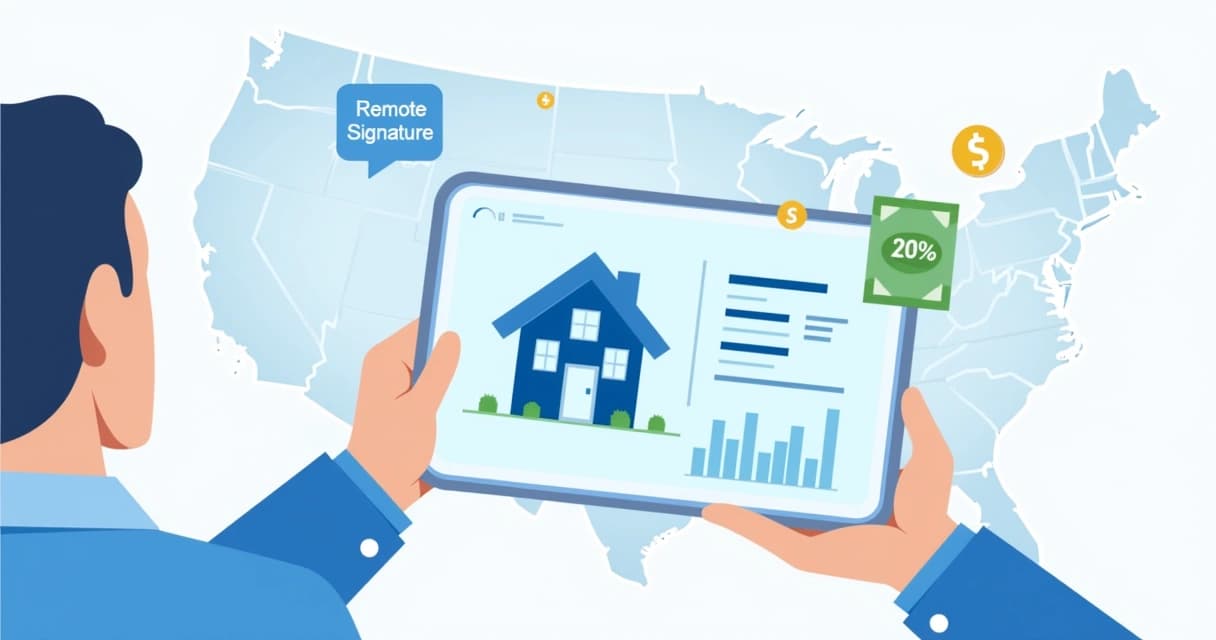
A recurring question among Brazilian investors is: is it really possible to finance the purchase of a house in the United States without being a resident – and with only 25% down payment? For many years, the rules were much stricter, requiring higher initial amounts and an extensive list of prerequisites. Today, the scenario has changed. American banks have been relaxing their policies, making this dream increasingly accessible.
You do not need to live in the U.S. to finance an American home.
Daniel Dourado's blog emerged from this evolution: a reference channel for those who wish to invest in high-end real estate, understand international financing options, and carry out the entire buying process, even while in Brazil.
How does financing for foreigners work today?
The main point: yes, it is now possible to finance up to 75% of the value of a property in the U.S., putting down only 25%. This important change has been mainly seen in banks in Florida, according to recent market data. Previously, the standard was to require 35% or more – a barrier for many foreign buyers.
For many Brazilians, this scenario represents a real opportunity to dollarize assets, whether by acquiring a vacation home, investment, or even for future residence. It is no coincidence that searches for investment in real estate in Orlando have never been higher.
 Practical example: property in Davenport, FL
- Price: US$ 450,000
- Down payment (25%): US$ 112,500
- Financed amount: US$ 337,500
- Estimated payment: US$ 2,243/month (7% annual interest, fixed for 30 years)
The best part is that, according to a guide aimed at first-time buyers, it is not even necessary to have established credit in the country, nor residency. The entire process can be remote, using certified digital signatures (RON).
Requirements for Brazilians to finance in the U.S.
Unlike what happens for Americans, the conditions are a bit different for non-residents. Sandra Mina, vice president of residential financing, explains that for properties up to US$1 million, American banks require at least 25% down payment, and for higher amounts, the percentage may increase (source Infomoney). The term usually varies between 15 and 30 years.
Summarizing the main points:
- Down payment: Starting at 25% of the property's value
- Term: 15 to 30 years
- Income verification: It is usually necessary to present a tax return from Brazil or a letter from an accountant
- Bank statements: To show payment conditions
- Committed income: The payment cannot exceed 30% of the declared income (read more about the calculation)
- Fees and extra costs: In addition to interest, there are bank charges, notary fees, registration, and insurance, which amount to around 5% of the property
Basic documents
To apply for credit, according to real estate experts, you will typically need:
- Valid passport
- Tax identification number (ITIN) – provided after opening an account or starting the process
- Proof of income (tax return, pay stubs, letter from accountant)
- Bank statements, usually from the last six months
- Proof of funds for the down payment and closing costs
In some cases, a credit report from Brazil may be requested. It is worth noting: each bank has slight differences in criteria, but today, all efforts revolve around simplifying this path for foreigners (download the complete list).
What is the approval process like?
Now comes the part that gives that butterflies in the stomach: how does credit analysis work for those who do not live in the United States? There is no single answer. The secret is to understand that the bank basically analyzes payment capacity and risk.
Remember: the higher down payment – from 25% to 35% – is precisely to compensate for the risk of default from those living abroad. On the other hand, the documentation is more “human,” adapted to the reality of those living in Brazil. The approval process takes 45 to 60 days, with well-defined stages.
You can finance even without established credit in the U.S.
 See the main stages:
- Initial consultation with a specialist broker (like in the Daniel Dourado project – Luxury Homes Orlando, where the analysis already identifies which bank has the best line for your profile)
- Pre-approval: sending basic documents for preliminary analysis
- Property analysis: evaluation to ensure that the value is aligned with the market
- Formal approval: defining the details of the contract
- Remote closing: everything can be signed online, without the need to travel
Tip: you can simulate amounts without commitment and only then decide whether to proceed to the formal approval stage. In an article about real estate investment in Florida, we explain that Orlando stands out for its legal security and potential appreciation for foreign investors.
Current interest rates and conditions
It is true that interest rates for foreigners tend to be a bit higher than for Americans. According to experts in real estate financing in the U.S., for those who prove income, the 25% down payment already allows access to competitive rates – even similar to those of residents. In 2024, average interest rates are between 6% and 8% per year, depending on the applicant's profile and the bank (Properstar data).
Curiosity: Some banks allow fixing the interest rate for up to 7 years (after that, it adjusts in an index linked to the market). This can be interesting for those who want predictability and security in their budget, especially in properties that generate income with seasonal rentals, such as rental homes in Orlando resorts.
Care and opportunities for the Brazilian investor
When financing, it is wise to plan how to manage your finances in dollars. After all, American debt paid with income in reais can be challenging in times of high currency volatility. Experts suggest maintaining a balance in an account in the U.S. to cover a few months of payments, reducing risks.
Additionally, factors such as succession and taxation need to be evaluated. In certain situations, heirs may face high fees when transferring a property not protected by a trust or offshore. The guide for the beginner investor delves into this topic, showing alternatives for asset protection.
However, do not be alarmed; most international clients complete the process without surprises, especially when they have the assistance of a broker with a recognized track record, like Daniel Dourado.
Conclusion
Financing properties in the U.S. has become a concrete possibility, even for those who live and work exclusively in Brazil. With only 25% down payment, it is possible to acquire high-end properties, build wealth in dollars, and perhaps start a new chapter outside the country. The secret is to seek specialists in the field, understand the details of the financing contract, and seek appropriate legal protection.
On the Daniel Dourado blog, you will find updated content, case studies, and practical guidance to take advantage of this rising market. Want to find out how much you would need to invest to finance your home in the United States? Fill out our form, learn about our differentials, and take the first step towards your next international property.
Frequently asked questions about financing for Brazilians in the U.S.
How does financing for Brazilians in the U.S. work?
Financing for Brazilians in the U.S. is more accessible than one might think. With a minimum down payment of 25%, it is possible to finance up to 75% of the property's value, usually with a term of up to 30 years. The entire process can be done remotely, requiring only proof of income and payment capacity with documents from Brazil. Interest rates and conditions vary according to the bank and the buyer's profile.
What documents are required for financing?
The main documents are: valid passport, American tax identification number (ITIN, obtained during the opening of a real estate account), proof of income (tax return, letter from accountant, or pay stubs), bank statements from the last six months, and proof of funds for down payment and closing costs. In some cases, a credit report from Brazil may be requested.
What is the minimum down payment required?
The minimum down payment currently is 25% for properties up to US$1 million, mainly in Florida and other states focused on foreign buyers. For higher amounts, the down payment tends to increase. Each bank may have particularities, but the market trend is to maintain the percentage at 25% to facilitate access for international investors.
Is it advantageous to finance a property in the U.S.?
Financing properties in the U.S. is advantageous for those seeking currency protection, diversification, and income generation in dollars. The American market offers legal security, liquidity, and appreciation. However, it is essential to evaluate currency risk and ensure reserves in dollars to avoid difficulties in making payments. Specialized advice is recommended to mitigate risks of succession and taxation.
Where to find the best financing options?
The best options are in banks that work with foreign clients, especially in Florida, where the market is more adapted to the profile of Brazilian investors. Experienced consultants, such as the team from Daniel Dourado – Luxury Homes Orlando, can guide you to the best lines, rates, and conditions of the moment. Using a broker with international networking facilitates negotiations and increases the chance of approval.