

At the top of the list of concerns I hear from my clients is always the same question: “How do I avoid falling into a legal trap when buying my house in Orlando?” And, honestly, this question is valid. I have seen Brazilians lose great opportunities – or money – due to lack of attention to the legal details of the process. Here, my proposal is to get straight to the point: what are the risks, how to avoid them, and why my work at Daniel Dourado Advisory goes beyond the traditional market in this aspect.
Why is the legal risk real for Brazilians investing in Orlando?
According to research by the Institute of Lawyers of RS, Brazilians invested over $1.45 billion in residential properties in Florida, each costing an average of $489,519. With so much money involved, small mistakes can lead to huge losses. The challenge is that American legislation differs greatly from Brazilian law, and relying solely on generic information or inexperienced agents can be costly.
My track record of over 58 transactions just in Magic Village shows that, with each negotiation, I discover some particularity. Therefore:
- Protecting yourself from legal headaches is not a luxury, but a basic strategy.
- Specialized advisory does determine the outcome of your investment.
The American contracts: what must not be missing?
Contrary to what many think, the standard contract used in Florida, known as FAR/BAR "As Is", protects both sides – as long as the clauses are well understood. What I see is concerning: Brazilians accepting contracts without translation, without support, and without understanding penalties, inspection deadlines, and contingencies.
Financing and inspection contingency clauses are your line of defense – do not give them up.
Among the points that I always personally review and guide my clients to demand are:
- Due diligence clauses, clearly specifying inspection deadlines and the possibility of withdrawal without penalties
- Financing contingency, allowing withdrawal if the bank does not approve the credit
- Title insurance and hidden burdens explicitly stated
- Details about furniture, equipment, and any outstanding condominium expenses
Common mistakes I see in those trying to do everything alone (or with limited help): missing deadlines, accepting 'as is' contracts without negotiating conditions, or paying a deposit before structuring a foreign buyer with the proper legal protection.
Understanding the role of the title company and escrow
Many come to me with questions about the role of the title company. In the American process, there is no notary office like in Brazil. The title company is responsible for all document verification and property ownership checks, to ensure there are no pending issues, lawsuits, or restrictions.
At closing, it is this agent who:
- Coordinates payments through the escrow system, where the money is 'held' until all conditions are confirmed
- Records the deed in your name after payment, providing the so-called title insurance
- Conducts thorough searches to avoid surprises like debts or hidden heirs
This drastically reduces risks if you have a team that closely monitors the title company. I have seen cases where, due to negligence, buyers inherited environmental fines or overdue condominium fees. My role is to ensure that, in the end, everything is clean as promised – and if it is not, to guide on legal refusal before closing the deal.

Due diligence: the pre-purchase check that no one should ignore
The article from the Notary College of Brazil is categorical: due diligence is a step capable of identifying hidden liabilities and ensuring security for the investor. From lawsuits to zoning issues, everything can arise in a detailed search. I always analyze:
- Fiscal and tax situation of the property
- Irregularities in renovations, obtaining short-term rental licenses (see details about licenses here)
- Conditions of the HOA (Homeowners Association) – rules, fees, penalties, and restrictions for rental
- Accuracy of registration data and possible burdens
This thorough check eliminates 'traps', such as properties sold in judicial dispute, units with rental embargo, or undeclared fees. Without this, the dream turns into a headache – a true account from Brazilians who sought me only after the problem arose.
Legal protection for those in Brazil
Investing from a distance requires even stricter protocols. I have served dozens of clients who, after reading my step-by-step guide, sought to secure each stage from Brazil. Here at Daniel Dourado Advisory, I adopt procedures that go beyond the minimum:
- All communication and sending/receiving of documents is done securely, digitally, and traceably
- Partner lawyer reviews each contract before signing, especially for holdings and family structures
- Hiring title insurance and reviewing with the title company are always mandatory
- Banking transactions via escrow, eliminating risky direct transfers
In all these stages, I am personally involved, answering questions and preventing hasty or misinformed decisions. Often, competitors stop at traditional intermediation – they do not deeply evaluate the legal nuances, nor do they actively partner with local lawyers.
Practical examples: where do Brazilians make the most mistakes?
I have witnessed situations where, due to ignorance of deadlines and rules, Brazilians lost the deposit paid or received notifications of lawsuits for HOA delinquency. Others were surprised by unpaid taxes included in the closing, or discovered late that the property had usage restrictions for rental.
I include cases such as:
- Buying in a launch without a clause for returning the deposit, even if there is a delay from the builder (understand why buying without an agent is a serious mistake)
- Acceptance of 'as is' contracts without detailed technical inspection
- Digital signatures without legal validation from the parties involved
That is why I always emphasize: no one has real experience if they have not faced and resolved such situations alongside the client. The Daniel Dourado project is born from this type of end-to-end support, which does not accept shortcuts in the name of “agility.”
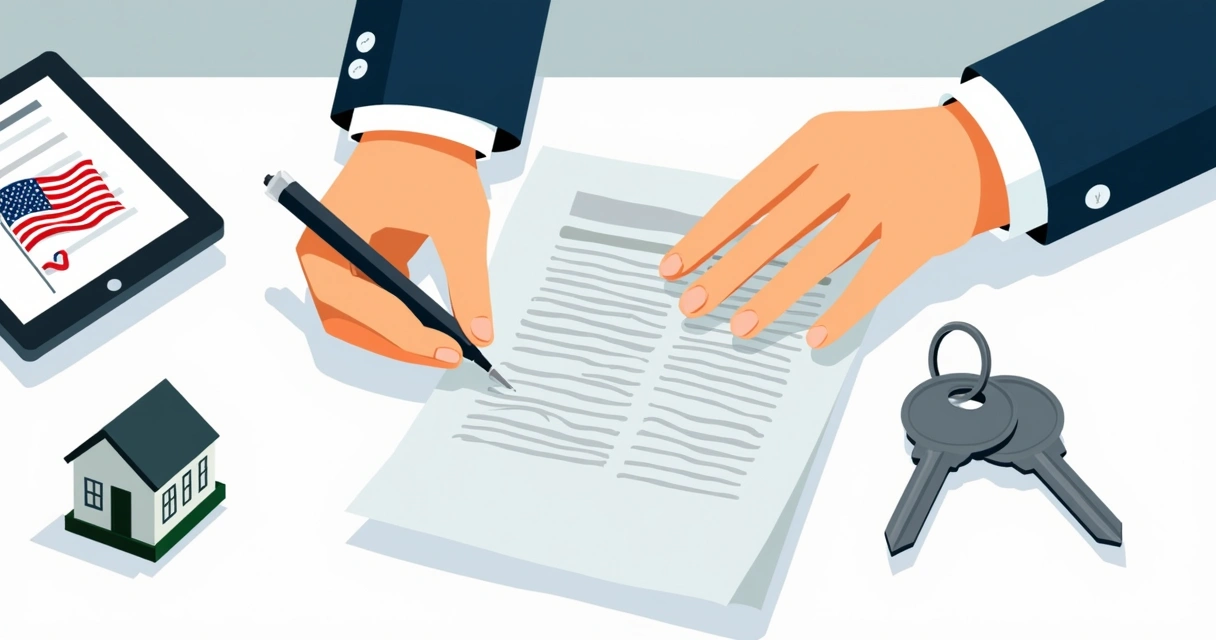
Contracts in focus: what is behind a secure transaction?
When compared to the market standard, I guarantee that my process includes points neglected by most. In meetings, I review each item of the contracts:
- Purchase Agreement (purchase promise detailing contingencies)
- Disclosures (mandatory transparency documents in the USA)
- Title Insurance (insurance of ownership against past issues)
- Homeowners Association Addendum (addendum to the condominium rules)
In the links of the guide for those investing in the USA and the comparative of real estate investment, there are practical examples and updated recommendations.
Legally protecting the business adds liquidity to the asset. International investors who lose this focus become more vulnerable to subsequent disputes, which leads to higher costs or, in extreme cases, litigation in the United States.
The contract is the last line between a good investment and a big headache.
Conclusion: does authority really make a difference?
When it comes to vacation homes in Orlando, legal security is not a detail, it is the investment itself. The experience of someone who has already prevented litigation, recovered clients' funds, and operated over 58 transactions in the main condo resorts of Orlando brings a layer of protection that traditional services simply do not deliver.
If you want to invest safely, now is the time to schedule a conversation with me. At Daniel Dourado Advisory, strategy, access, and secure execution go hand in hand, transforming risk into results for those who want to invest without surprises.
Frequently asked questions
What documents do I need to buy a house?
The main documents for purchase are a valid passport, proof of income and source of funds, and possibly the establishment of a company in the USA if the purchase involves a holding. Receipts for deposits, articles of incorporation, and proof of residence will also be required. The title company will also request tax forms and any consular authorizations for foreigners.
How to avoid scams when buying property in Orlando?
Scams can be avoided by following the entire process only through qualified professionals, checking each document, and demanding financial operations exclusively via escrow. Never transfer funds to individuals. Ensure that all negotiations go through a title company registered in Florida and validated on a regulated platform. The support of an advisor with a proven track record of international operations, as I provide, is the most solid barrier against fraud.
Do I need a lawyer to buy a house in the USA?
Having a lawyer is recommended, especially in transactions involving holdings, heirs, delinquent parties, or complex financing. In Orlando, residential transactions can occur without a lawyer, but legal advisory increases security, especially for those investing from Brazil. Here, I always involve a partner lawyer in the review of contracts, as a standard of Daniel Dourado Advisory.
What are the extra costs in the purchase?
In addition to the property value, there are costs such as title company fees, title insurance, notary/registration fees, inspection, real estate agent fees (usually paid by the seller), and HOA fees. There may also be local ITBI charges, international remittance banking costs, and consular fees for notarization. Everything is specified in advance in the closing statement.
How to choose a reliable real estate agency in Orlando?
The decision should consider transaction history, public reviews, active participation in the best condominiums, and transparent end-to-end service. Premier Sotheby's, where I work, is in the top 1% of the market, with 80+ 5-star reviews and over 58 successful transactions. Always be wary of prices far below the market or promises of 'guaranteed' returns. Focus on those who offer strategic advisory, demonstrate deep market knowledge, and support you in the post-sale process.