

Imagine the following scenario: you own an investment property in Orlando for a few years. The property has appreciated, rental income has increased, but now it makes sense to seek a new opportunity — perhaps a larger house in an even more premium condominium, or even diversify into another neighborhood with growth potential. Then the question arises: sell, pocket the profit, but… what about capital gains taxes? As Brazilians, our first feeling is one of apprehension. Taxes are usually not low, nor easy to manage.
It is in this context that a concept has emerged that is gaining more and more traction among foreign investors in the U.S., including Brazilians: the 1031 Exchange. Today, accessing specialized content and consulting services like the project led by Daniel Dourado, it is impossible not to hear the term — usually accompanied by expressions like “brutal difference in profitability,” “asset protection,” and “expansion without a tax bite.”
What is the 1031 Exchange: a starting point
Answering this question involves understanding a simple logic: when you sell an investment property in the U.S., you typically pay tax on the profit obtained (the so-called capital gain). The 1031 Exchange allows you to defer — not eliminate, but defer — this payment, as long as you reinvest the amount in another property of similar purpose. Barnes New York specialists detail that this mechanism, provided for in the U.S. Tax Code since 1921, focuses on encouraging the growth of real estate assets, without penalizing the investor who wishes to reinvest.
“Gaining time is gaining money in the world of real estate investments.”
Anyone who has researched investments in vacation homes in the U.S. knows how much taxation can compromise returns. With the 1031 Exchange, there is an opportunity to defer the tax and, in the meantime, make your money work in another asset — without the interference of the American taxman.
How it works in practice: from sale to reinvestment
In theory, it seems simple, but the process requires attention to rules and details. Let’s break it down:
The basic step-by-step
- Sale of the current property: You put your investment house or apartment up for sale.
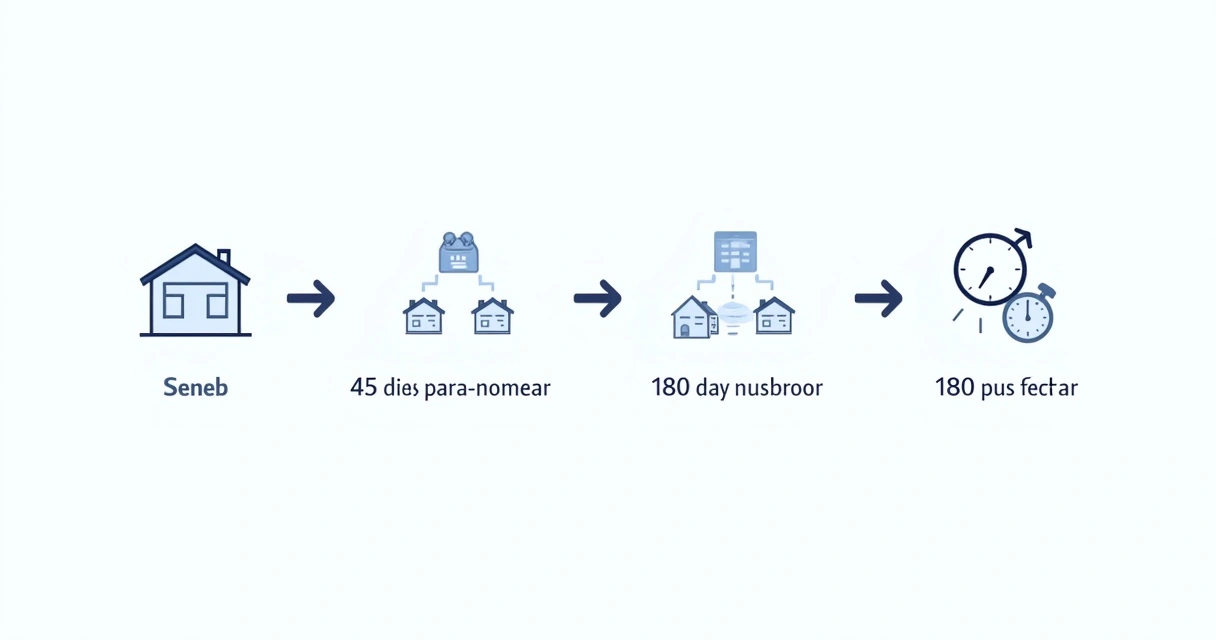
- Designation of target properties: Within 45 days, you need to identify up to three new properties to reinvest in — it is mandatory to follow this deadline, as explained by ETFFIN.
- Completion of the purchase: You have 180 days to close the acquisition of the new asset(s), starting from the date of the original sale. Waiting can be risky: missing the deadline means paying immediate tax on the capital gain.
- Use of Qualified Intermediary: The money does not go through your account. It goes directly from the buyer to the qualified intermediary (QI), who holds the amount until reinvestment.
 If the new property is valued at equal to or greater than the sold one, all tax is deferred.
- If it is less, tax is paid on the difference.
- Only investment properties qualify, never primary residences.
According to Vida Floridiana, the scope of application is vast: commercial properties, agricultural properties, rental properties, and even some properties under construction.
Who can take advantage?
Any taxpayer in the U.S.: individuals, residents or non-residents, LLCs, companies, trusts. It is only necessary that the property is located in the U.S., as recommended by Shield International Tax. In other words, Brazilians investing in Orlando, Miami, or any American city can consider the strategy.
Difference between 1031 Exchange and regular sale
The big change lies in the tax. In regular sales, the capital gain tax is paid in the same year as the sale. With the 1031 Exchange, what would be a “discount” of up to 33% on the profit is deferred, according to estimates from the Ativore blog.
“Deferring tax is not denying tax, but the impact on cash flow is radical.”
The effect is twofold: postponed tax expense and full reinvestment capital, accelerating the effect of compound interest on dollarized assets.
Why many Brazilians still don’t use it?
There are three main factors: lack of knowledge about the rule, myths about bureaucracy, and fear of tax mistakes. Daniel Dourado encounters insecure investors daily — many imagining that only Americans would have the right, when in fact, the mechanism is perfectly legal for foreigners.
Another common obstacle is the hasty choice of replacement properties. Surprisingly, there is frustration when the portfolio in the area is limited or when the goal is to exchange for even more sophisticated properties, which may not be publicly listed (the so-called off-market). This is where Daniel's experience, combined with a network of specialists, makes all the difference in crafting the strategy.
 The most sensitive rules: mistakes that cost dearly
No family transactions
The legislation prohibits exchanges between close relatives (parents, children, siblings) to avoid simulated maneuvers. This rules out “creative” ideas and keeps the control of asset leverage within legal limits.
What is “similarity”?
It does not have to be an identical property, but rather “of the same nature and class.” You can exchange a vacation apartment for a condominium house, or even for a commercial property — as long as it is not a primary residence. Flexibility exists, but always consulting a trusted tax team.
Boot: beware of cash difference
When receiving part of the sale amount in cash, the amount becomes immediately taxable. Ideally, the entire amount should be allocated in full; otherwise, there is involuntary double taxation.
Attention to liabilities and financing
If the new property assumes a lower financing than the previous one, the IRS understands that you would “profit” from the operation, taxing the difference.
Technical support, almost mandatory
Errors in document submission, missing deadlines, incorrect choice of intermediaries — all of this can cancel the benefit. This is where the work of consulting projects like Daniel Dourado's reduces risks and increases returns.
Strategic advantages for Brazilian investors
- Allows portfolio growth with less loss to taxes
- Facilitates entry into more resilient markets (premium neighborhoods in Orlando, for example)
- Enables diversification of assets (mixing vacation homes, commercial, multifamily)
- Increases the potential for dollarized income, protecting against depreciation of the real
In series of published analyses on why Orlando is a safe option for investment, it becomes clear that deferring the tax reinforces the effect of a strong dollar over many years.
“Multiplying wealth in a strong currency depends on every detail of the tax strategy.”
Practical example: from Southern Brazil to a condominium in Winter Garden
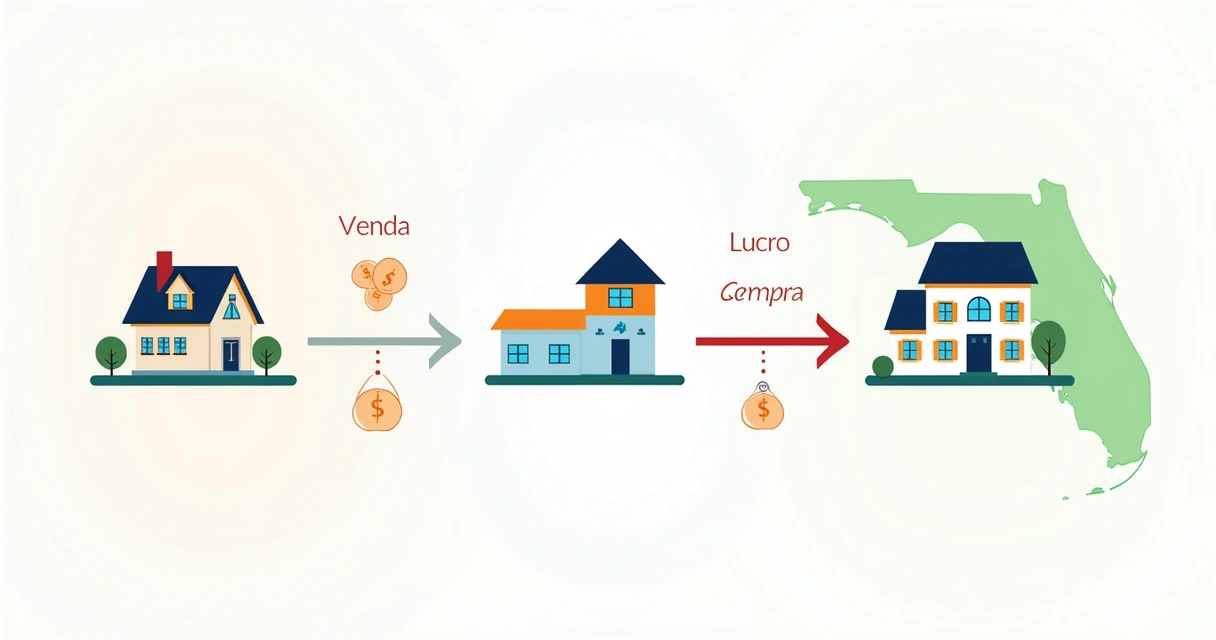
Imagine Maria, a businesswoman from Rio Grande do Sul, who acquired a vacation property in Orlando in 2016, focusing on seasonal rentals. The property appreciated: purchased for $280,000, now sold for $395,000. Net profit of $115,000. If she sells normally, she pays between 15% and 33% tax on that gain, varying according to analysis from the Ativore blog.
With the 1031 Exchange, Maria acquires a new house for $440,000, reinvests 100% of the amount, eliminates the tax due now, and boosts her rentals — with the potential to enhance the quality of the property and the target audience. And yes, the advantage is cumulative if she decides to transact multiple times in the future. She will only pay the tax when she decides to “take it out of the game” (sell without reinvesting).
 Tax and legal issues for Brazilians
The tax is only deferred, not forgiven
Sooner or later, the capital gain will be charged, unless the investor continues to make new 1031 exchanges. In legacy planning, with inheritance and succession, there are details that need individualized analysis. In the case of death, for example, heirs can eliminate the gain through the step up in basis — but there are nuances in the application of American law.
The costs involved
- Fees for the Qualified Intermediary — vary according to the transaction amount
- Notary fees, state taxes, due diligence
- Fees for lawyers and accountants to ensure that all requirements are met
In general, the benefits outweigh any potential expenses, but honestly, for properties of more modest value, it may not be worth it.
How to choose properties for the 1031 Exchange
The investor has the freedom to seek more profitable assets, properties in rapidly growing regions, or even experiment with different segments — within the “similarity” rule. Investigating the opportunities for seasonal rentals in Orlando, for example, reveals scenarios where the 1031 can strengthen the portfolio of resorts, townhouses, and high-end condominiums — working with liquidity, guest turnover, and appreciation in strong dollar cycles.
 Frequently asked questions among Brazilian investors
- Can I combine several properties to buy one large one? Yes: within the rules, it is possible to pool the value of several sales to acquire a single asset, or divide the amount into up to three new properties.
- What if there is a loss on the sale? There is no tax to defer, but it is possible to use the loss to offset gains from other operations on the U.S. income tax.
In the meetings and consultations promoted by Daniel Dourado, the questions range from details about documentation to doubts about deadlines and choosing reliable intermediaries. The result: investors arrive better prepared to turn strategy into profitability.
Success stories and why not everyone does it
There are frequent reports from Brazilian clients who have leveraged portfolios in Orlando by skipping tax steps with the 1031 Exchange. But it is also true that some miss the window of opportunity due to excessive caution or haste — forgetting that sometimes it is worth holding the property until the right opportunity arises. In guides for buying the first house in Orlando, it is easy to see how preparation makes a difference.
“A good deal can be turned into an excellent one if the rules of the game are known.”
The role of the real estate consultant and the strategic team
If there is one point where all studies agree, it is on the role of the technical team around the investor. Specialized brokers, qualified intermediaries, lawyers, accountants; all converge towards a common goal: to meet tax and legal requirements and guide the choice of the most promising properties.
In the work developed in projects like Daniel Dourado's, especially for Brazilians looking to dollarize by diversifying risks, the possibility of managing multiple cycles of 1031 Exchange over decades is a real shortcut to asset protection.
What to do before deciding on a 1031 Exchange
- Talk to your accountant specialized in the U.S. and Brazil to understand the combined tax consequences
- Consult a lawyer in the U.S. to check contract and succession peculiarities
- Choose a broker and a Qualified Intermediary with real experience in these processes
- Plan target property options in advance — research availability, vacancy, condominium rules, appreciation potential
- Align expectations: the process does not eliminate taxes, but defers and enhances opportunities
And finally, assess whether your profile and assets justify the strategy. In some cases, it may be more logical to sell and pay the tax now if the goal is total liquidity or a change of segment.
Conclusion
The 1031 Exchange has radically changed the way of investing in real estate in the United States, especially for those looking to build wealth in the long term. For Brazilians, the rule is not just technical; it represents a real opportunity to multiply wealth in dollars, reduce tax impacts, and turn each property exchange into a new cycle of growth.
The most important thing? Information and strategy — elements that are abundant in the blog led by Daniel Dourado, a reference in personalized consulting and insights for high-end Brazilian investors in Orlando. If you are thinking of enhancing your portfolio, protecting your income in a strong currency, and taking a step further in the international market, seeking guidance from someone who understands the game makes all the difference.
“The difference between a good investment and an extraordinary result often lies in the choice of the tax path.”
Learn more about our project, clear your doubts, and prepare to transform your real estate investment strategy in the U.S.
Frequently asked questions about 1031 Exchange
What is the 1031 Exchange?
The 1031 Exchange is a tax mechanism provided for in the U.S. tax code that allows the investor to defer the payment of capital gains tax on the sale of an investment property, as long as the entire sale amount is applied to another “similar” property within specific deadlines. Thus, taxation is deferred, enhancing the reinvestment of capital. This mechanism is detailed in publications such as the article from Barnes New York and helps investors grow without the immediate tax burden.
How can Brazilian investors use the 1031 Exchange?
It is enough to own an investment property in the U.S., sell it, and reinvest the amount in another equivalent asset, following the deadline rules (45 days to identify the new property, 180 days to close the purchase) and other requirements of U.S. law. It is legal for foreigners, including Brazilians, as long as all procedural steps are respected and a qualified intermediary is used. Often, the support of specialized consultants, like in the case of the project led by Daniel Dourado, makes all the difference for Brazilians to overcome legal and procedural barriers — enhancing results.
What are the advantages of the 1031 Exchange?
The main advantage is to postpone (defer) the payment of capital gains tax — which can reach 33% of the profit on the sale — allowing the investor to use the entire sale amount for the acquisition of new assets. This contributes to greater wealth growth, better utilization of compound interest, diversification, and strengthening of dollarized income. For the Brazilian investor, it represents protection against the volatility of the real and expansion of the portfolio without the need to allocate part of the profits to the U.S. tax authorities. The Ativore blog presents more details on how this deferral impacts cash flow and growth potential.
Which properties can participate in the 1031 Exchange?
The rule applies to investment properties: residential properties rented for short or long term, commercial properties, land, and even agricultural properties. It is not allowed for primary residences (personal housing) or properties for personal use. The concept of “similarity” is flexible, allowing exchanges between different types, as long as they are used for investment or income generation, as highlighted by the Vida Floridiana guide.
Is it worth doing a 1031 Exchange?
In general, yes, especially for properties of medium to high value, when the goal is to grow wealth in the long term and reinvest in better opportunities. The impact on capital preservation and the chance to enhance your returns are enormous. However, it is necessary to consider procedural costs and the need to comply with strict rules, as well as evaluate, case by case, with the support of specialists to understand if the strategy makes sense for your profile. Often, qualified guidance, such as that offered by Daniel Dourado's project to Brazilian investors, is the differentiator.